
Meta Description :
Russia leans on cryptocurrency and DeFi to bypass sanctions, sustain trade, and craft new sovereign financial strategies.
Introduction: Sanctions and the Search for Alternatives
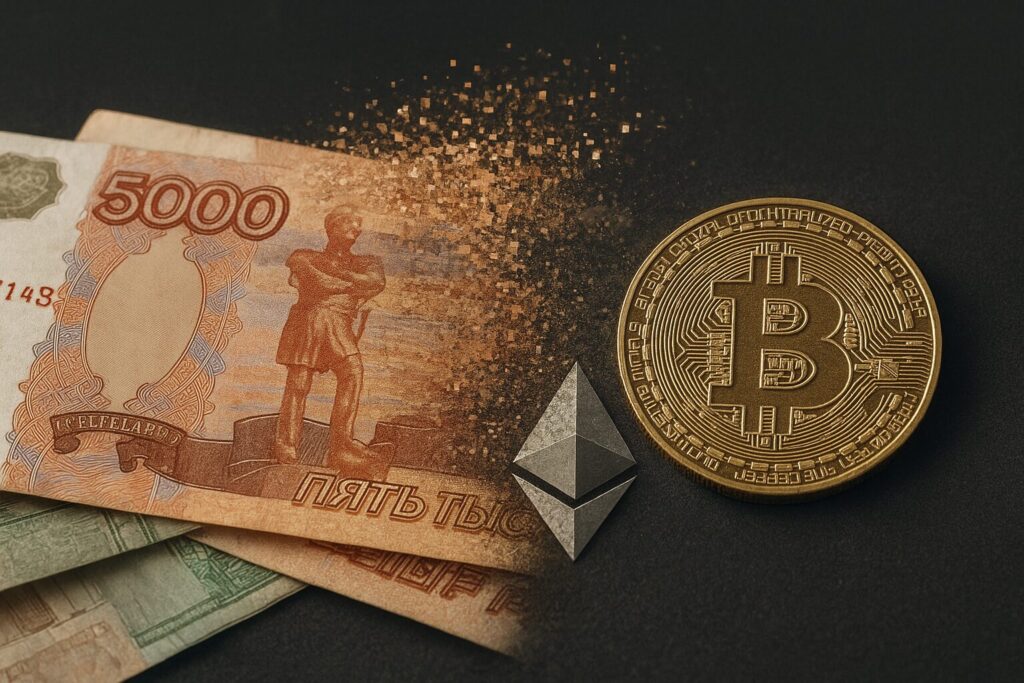
When Western sanctions tightened after the Ukraine conflict, Russia’s access to global finance shrank dramatically. The SWIFT ban, restrictions on major banks, and trade barriers created what looked like an economic chokehold. Yet instead of collapsing, Moscow began searching for new tools to keep money flowing and trade alive.
The surprising answer? Digital assets.
Cryptocurrency and decentralized finance (DeFi) are no longer fringe experiments in Russia—they’re becoming survival mechanisms. From using stablecoins in cross-border deals to leaning on blockchain networks that can’t be easily blocked, Russia is showing how digital assets can reshape financial strategies under geopolitical pressure.
Why Russia Turned to Cryptocurrency
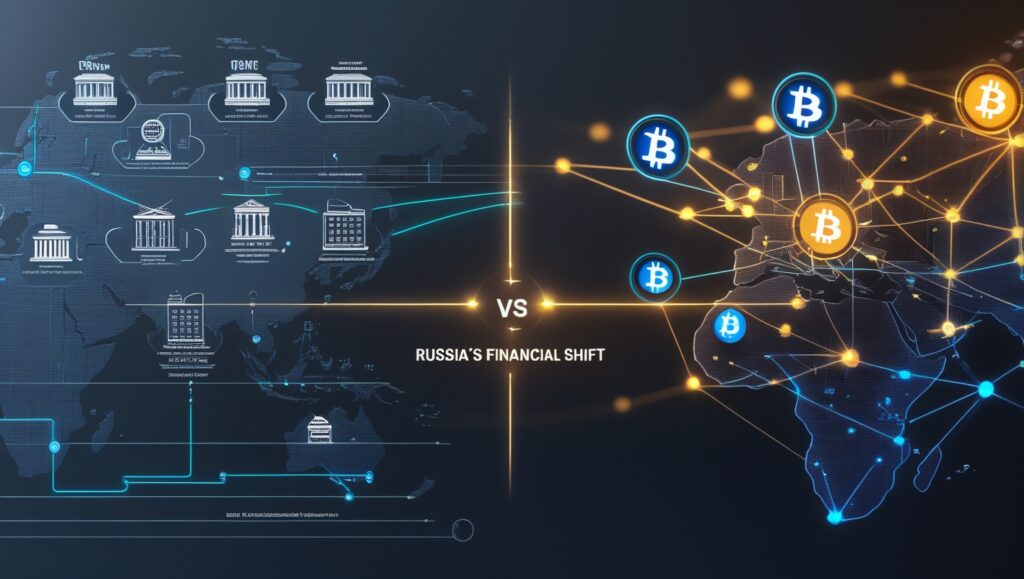
Russia’s pivot to crypto wasn’t spontaneous—it was a response to necessity. Traditional banking was suddenly out of reach, and alternatives were needed fast.
• Escaping SWIFT restrictions: With key banks cut off from the SWIFT messaging system, cryptocurrency transfers offered Russia a detour. Peer-to-peer (P2P) transactions bypass middlemen and avoid Western oversight.
• Using DeFi for trade: Decentralized finance platforms provide services—loans, swaps, and settlements—without the involvement of centralized institutions. This makes them appealing for sanctioned entities.
• Energy trade in Bitcoin and stablecoins: Reports indicate that Russia has explored accepting Bitcoin and stablecoins like USDT for oil and gas deals, especially with Asian partners.
In other words, crypto is becoming a lifeline where traditional finance no longer works.
Hiding in Plain Sight: Crypto and Financial Obscurity
A major advantage of crypto for Russia is the ability to move money in ways that are harder to track. While blockchains are technically transparent, creative strategies can make tracing difficult.
• Mixers and privacy coins: By using tools like mixers or privacy-oriented coins (such as Monero), entities can conceal transaction origins and destinations.
• Stablecoin settlements: Stablecoins, pegged to traditional currencies like the dollar, allow Russia to conduct trade with less volatility than Bitcoin while avoiding banks.
• Cross-border cooperation: Partnerships with nations such as Iran and China highlight how crypto is quietly powering alternative trade channels outside the Western orbit.
For Moscow, this means financial flows remain hidden enough to keep deals moving—even under heavy scrutiny.
The Global Ripple Effect of Russia’s DeFi Strategy
Russia’s crypto-driven financial tactics don’t just affect its own economy—they are reshaping the global financial landscape.
1. Accelerating de-dollarization: Each deal settled in crypto instead of dollars chips away at the U.S. currency’s dominance.
2. A playbook for other sanctioned nations: Iran, Venezuela, and North Korea are watching closely. Russia’s use of digital assets could inspire similar adaptations elsewhere.
3. Challenges for Western regulators: Unlike banks, decentralized networks don’t have CEOs or headquarters to target with sanctions, making enforcement far trickier.
4. Impact on the DeFi ecosystem itself: State-level participation adds liquidity, but it may also attract unwanted regulatory crackdowns on the platforms being used.
In short, Russia’s choices may mark the beginning of a new era where crypto becomes a tool of geopolitics as much as finance.
The Risks Russia Faces
Even with its advantages, relying on cryptocurrency is not a perfect solution. Russia faces several hurdles in this new financial experiment:
• Volatility and instability: Cryptocurrencies rise and fall in value rapidly. Even stablecoins depend on trust in the issuing company.
• Uneven global acceptance: Not every trading partner is comfortable with crypto. Some countries worry about regulatory backlash or reputational risks.
• Western countermeasures: The U.S. and EU are sanctioning crypto wallets, blacklisting mixers, and pushing major exchanges to cut ties with Russian-linked accounts.
• Tech vulnerabilities: DeFi platforms are infamous for hacks, smart contract failures, and scams. Relying on them carries new dangers.
So while crypto offers a way out of the sanctions trap, it also brings a new layer of uncertainty.
Looking Ahead: Sovereign Finance in a Digital Age

Russia’s crypto-fueled financial adaptation is more than just a clever workaround—it’s a glimpse of the future. Digital assets are evolving from speculative investments into geopolitical instruments. By leaning on DeFi, stablecoins, and blockchain rails, Russia is not just surviving sanctions; it is also pushing the world toward a multipolar financial system less dominated by the West.
The question is not whether crypto will shape sovereign finance—it already is. The real question is how quickly other nations will follow Russia’s lead, and how regulators will respond.
For now, Russia’s experiment shows one thing clearly: in the digital age, money is no longer bound by borders, banks, or even sanctions.